
Elucidation of oral dryness pathology in Sjögren's disease by spatial transcriptome analysis
Abstract
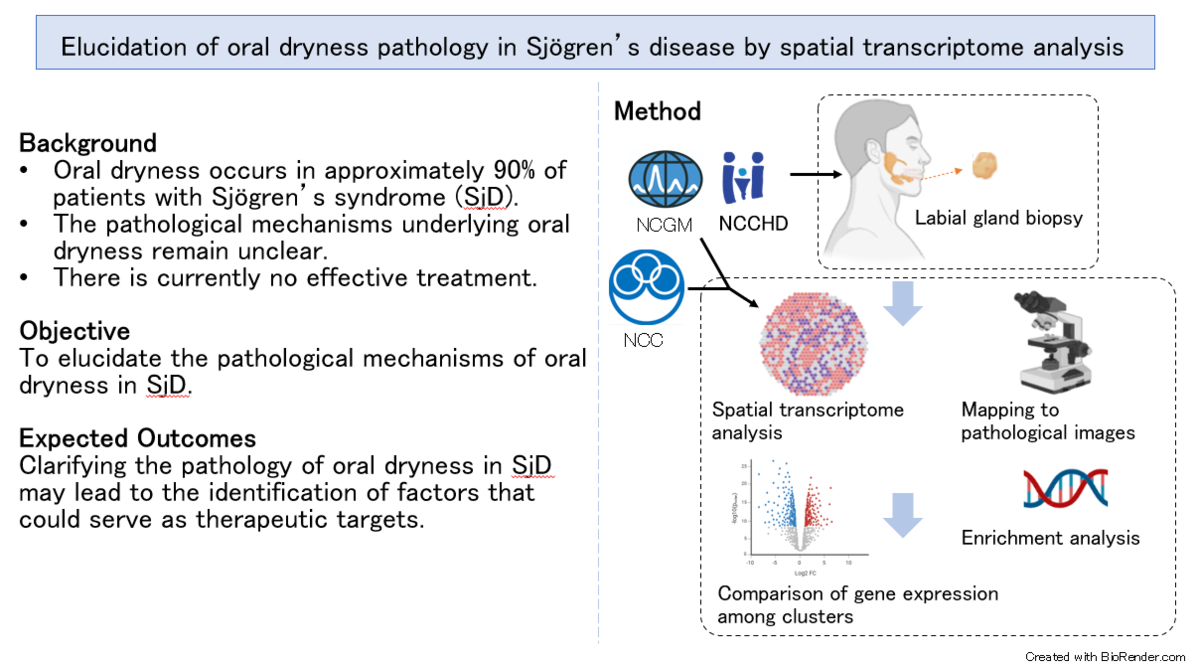
This study aims to analyze salivary gland tissue collected at the time of diagnosis from patients diagnosed with Sjögren's disease (SjD) at the National Center for Global Health and Medicine and the National Center for Child Health and Development, using a novel technique called spatial transcriptome analysis.
Sjögren's disease is an autoimmune disorder in which the salivary and lacrimal glands are attacked and destroyed by the body's own immune system. In Japan, including potential cases, the number of patients is estimated to be between 100,000 and 300,000, making it the second most common autoimmune disease after rheumatoid arthritis. It is also relatively frequent among pediatric collagen diseases, but diagnosis remains challenging, and many aspects of its pathology and characteristics are still unclear. Approximately 90% of patients suffer from oral dryness, a symptom that severely impairs quality of life.
The onset of SjD is thought to involve multiple factors, including genetic predisposition and environmental influences, leading to abnormal activation of the immune system. Labial gland biopsy, performed for diagnostic purposes, often reveals lymphocyte infiltration and destruction of salivary gland tissue. Until recently, there has been no established treatment for SjD, and management has focused mainly on alleviating symptoms. However, research has advanced rapidly in recent years, and many new therapeutic agents are now under development.
Spatial transcriptome analysis is an innovative technology that enables visualization of gene expression patterns across entire tissues, mapping how genes function in relation to cellular interactions and tissue architecture. By applying this method to salivary gland tissue used for diagnosis, we aim to clarify the mechanisms underlying glandular destruction in Sjögren's disease and deepen our understanding of its pathology.
This study is a collaborative effort among the National Center for Global Health and Medicine, the National Center for Child Health and Development, and the National Cancer Center.
Perspectives
- Spatial gene expression analysis will become possible using salivary gland tissue from patients with Sjögren's disease.Spatial gene expression analysis will become possible using salivary gland tissue from patients with Sjögren's disease.
- A deeper understanding will be gained of how salivary glands are destroyed in the disease process.
- Fundamental insights will be obtained that may lead to the development of new therapies and diagnostic methods.
Comments from principal researcher
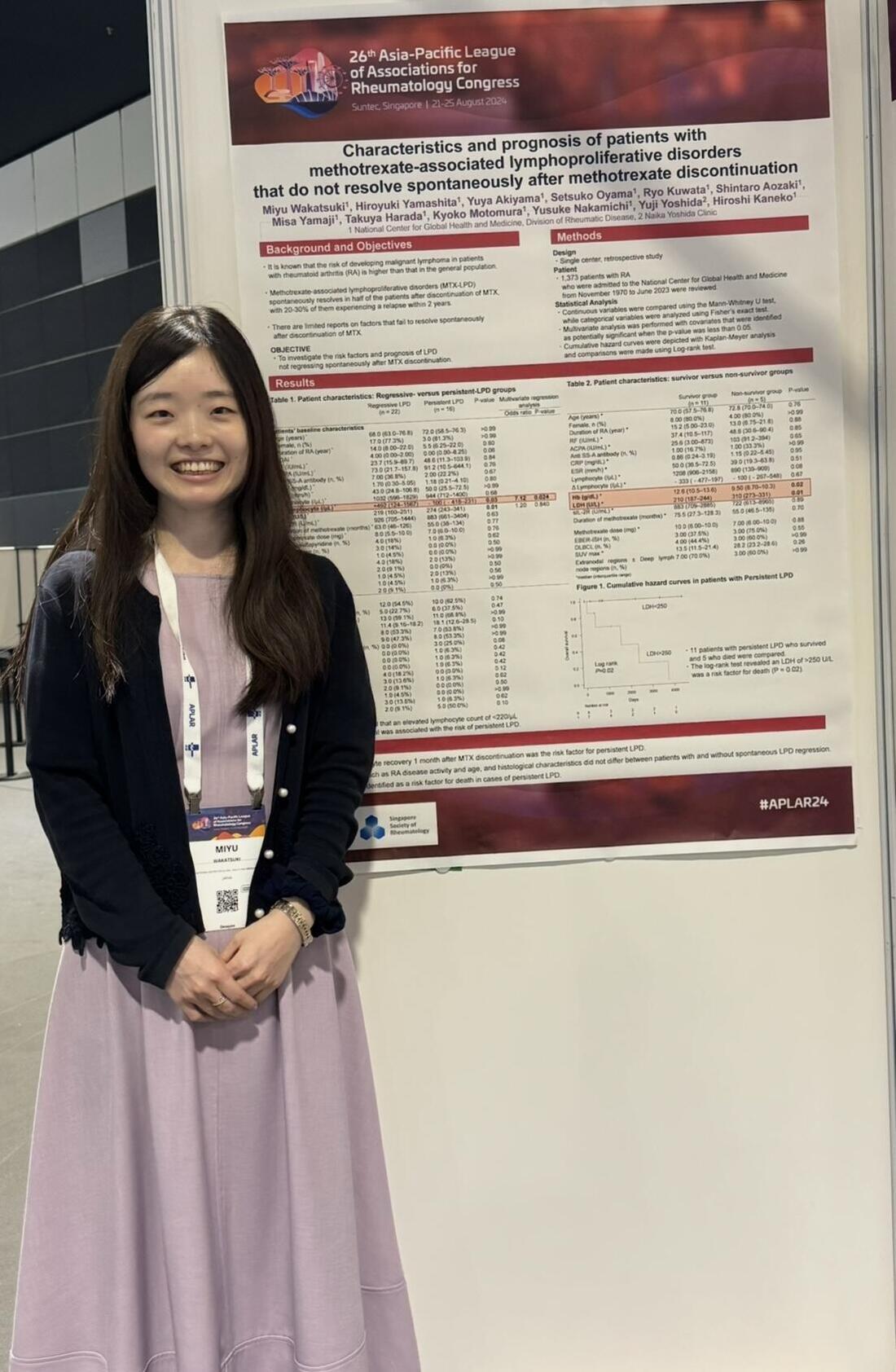
Miyu Wakatsuki(Department of Rheumatic Diseases, National Center for Global Health and Medicine)
Sjögren's disease has long lacked effective treatments, and many patients suffer from oral dryness. Spatial transcriptome analysis, which has rapidly advanced in recent years, is an innovative technology that enables visualization of how genes function within tissues. Through this study, we aim to clarify the mechanisms of salivary gland destruction and deepen our understanding of the disease pathology, thereby contributing to future advances in diagnosis and the development of new therapeutic strategies.
Shared Researchers
Takuya Harada, Hiroyuki Takahashi(Department of Rheumatic Diseases, National Center for Global Health and Medicine)
Yuhi Takagi(Division of Nephrology and Rheumatology, National Center for Child Health and Development)