
Unraveling the Mechanisms of Atrial Fibrillation Initiation and Maintenance Using Cardiac Imaging
Abstract
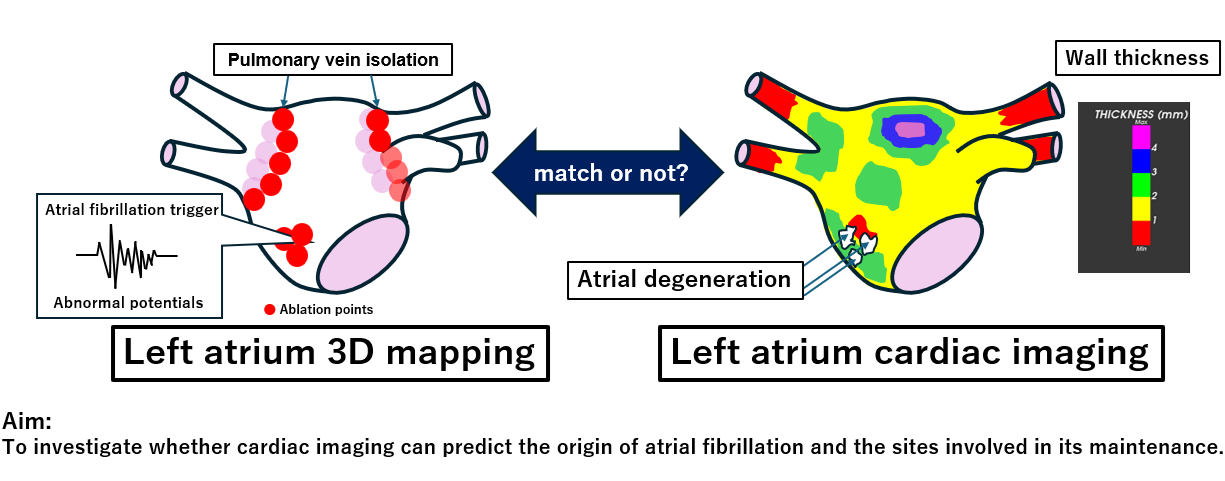
Atrial fibrillation is an arrhythmia that contributes to the development of heart failure and ischemic stroke, and catheter ablation is one of the established therapeutic options. The electrical triggers responsible for atrial fibrillation initiation have been shown to originate predominantly from the pulmonary veins, and pulmonary vein isolation (PV isolation) is currently the only well-established ablation strategy.
In patients with persistent atrial fibrillation, left atrial enlargement and myocardial degeneration are frequently observed, and the outcomes of PV isolation alone have been reported to be suboptimal. Additional ablation strategies beyond PV isolation have therefore been explored; however, robust evidence supporting their efficacy remains limited. Because the prevalence of atrial fibrillation increases with aging, elucidating the mechanisms underlying the initiation and maintenance of treatment-refractory atrial fibrillation represents an important public health issue in aging societies.
In recent years, attention has been gained toward the relationship between the localization of myocardial degeneration and arrhythmogenic substrates. Imaging-guided strategies, which differ from conventional voltage-based approaches, are expected to enable the development of novel ablation strategies beyond PV isolation. The aim of this study is to elucidate the mechanisms of atrial fibrillation initiation and maintenance using cardiac imaging.
Perspectives
Based on the findings, it may be possible to propose a novel catheter ablation strategy for atrial fibrillation.
Comments from principal researcher
Satoshi Oka(National Cerebral and Cardiovascular Center, Department of Cardiovascular Medicine, Division of Arrhythmia)

Shared Researchers
Kengo Kusano(National Cerebral and Cardiovascular Center, Department of Cardiovascular Medicine, Division of Arrhythmia)
Daiki Tomidokoro(National Center for Global Health and Medicine, Department of Gene Diagnostics and Therapeutics Research Institute)